Special Education Pre School Continuing Education Online
Bachelor of Science (BS) in Early Childhood Special Education Degree
What Is a Dual Degree in Early Childhood Education and Special Education?
The Bachelor of Science in Early Childhood Education and Early Childhood Special Education at Grand Canyon University (GCU) is offered by the College of Education. This degree prepares aspiring teacher candidates to pursue a career devoted to helping young children strive to reach their full potential as learners and community members. Students who earn an early childhood special education degree are well-positioned to recognize the signs of developmental delays and disabilities, and to work with families, schools and other stakeholders to meet the needs of these exceptional children.
This dual bachelor's degree combines the specializations of early childhood education and special education. Teacher candidates explore the education of children with and without exceptionalities, as well as concepts of child, family and community collaboration and advocacy.
The early childhood special education degree is regionally accredited and approved by the Arizona Department of Education. Graduates are qualified to pursue a dual teaching certification credential in Arizona.
Why Earn an Early Childhood and Special Education Degree from GCU?
The BS in Early Childhood Special Education degree at GCU emphasizes the value of servant leadership and Christian ethics. Aspiring teacher candidates may pursue a career working with children during a critical period in their development, when the right role models can encourage these young learners to embrace creativity, strive toward literacy and develop an enduring love of learning, while also helping children with exceptionalities.
GCU supports a modern and diverse student body. This degree offers flexible learning options to suit the needs of our students. Both online and on-campus classes are available.
What Will I Study as an Early Childhood Special Education Major?
Early childhood special education majors at GCU benefit from an in-depth and comprehensive curriculum that imparts essential knowledge and critical classroom skills, including the following:
- Early language and literacy development
- Social and emotional development
- Behavioral interventions
- Classroom management
- Learning strategies
- Instructional methods
- Assessments, evaluations and progress reporting
- Child, family and community collaboration
- Educational advocacy for children with and without exceptionalities
This bachelor's degree program includes 190 field experience hours. All teacher candidates must successfully complete a 15-week student teaching experience in an inclusive environment with children birth to grade three.
What Are the Career Options for Graduates of the Early Childhood Special Education Program?
There are many possible career paths for individuals with a background in early childhood special education. This degree could equip you to work in any of these settings:
- Early childhood education centers
- Public and private preschool/pre-K
- Public and private elementary school
- Nonprofit organizations
- Educational policy organizations
Some of the jobs that may be directly related to an early childhood special education degree could include:
- Education teacher (postsecondary)
- Special education teacher (postsecondary preschool, kindergarten and elementary school)
- Teaching assistant (special education)
The U.S. Bureau of Labor Statistics states that, "about 38,600 openings for special education teachers are projected each year, on average, over the decade" from 2020 to 2030. "Many of those openings are expected to result from the need to replace workers who transfer to different occupations or exit the labor force, such as to retire."1
What Licensure is Obtained With the Early Childhood Special Education Degree
The Bachelor of Science in Early Childhood Education and Early Childhood Special Education degree program at Grand Canyon University leads to initial teacher licensure. This program meets licensure requirements in most states, including Arizona. Upon completion of this dual degree program, teacher certification may be pursued. Licensure may require practicum hours, state exams, student teaching and an institutional recommendation from GCU.
Early Childhood Education and Special Education Degree FAQs
Is it worth it getting a degree in an early childhood special education program?
Many people regard early childhood and special education as two of the most important areas of expertise in the field of education. According to the U.S. Bureau of Labor Statistics, special education teachers have a median annual wage of $61,820 as of May 20212 — making this degree worth it for those with a passion for teaching young children with certain exceptionalities and nurturing their growth along the way.
Why is early childhood education so important for students with intellectual exceptionalities?
Early intervention is critical when children have developmental exceptionalities. Children with intellectual exceptionalities can do well in school but will likely need individualized help from special educators. The student's inclusive education plan and early intervention shows positive changes in the health, language, and the cognitive, social and emotional development of the student.3 Early childhood education degree graduates are necessary to the success of these exceptional students.
Does Grand Canyon University have an accredited teaching program?
Yes. This early childhood special education degree and several more GCU programs are regionally accredited and approved by the Arizona Department of Education. Full accreditation means these programs prepare effective educators who continue to grow as professionals and have demonstrated their commitment to quality. Visit the college of education accreditation page to see a full list of AAQEP-Accredited programs.
1 COVID-19 has adversely affected the global economy and data from 2020 may be atypical compared to prior years. The pandemic may impact the predicted future workforce outcomes indicated by the U.S. Bureau of Labor Statistics as well. Accordingly, data shown is based on September 2021, which can be found here: U.S. Bureau of Labor Statistics, Occupational Outlook Handbook, Special Education Teachers, retrieved on 7/25/2022
2 The earnings referenced were reported by the U.S. Bureau of Labor Statistics ("BLS"), Special Education Teachers as of May 2021. Due to COVID-19, data from 2020 may be atypical compared to prior years. The pandemic may also impact the predicted future workforce outcomes indicated by the BLS. BLS calculates the median using salaries of workers from across the country with varying levels of education and experience and does not reflect the earnings of GCU graduates as special education teachers. It does not reflect earnings of workers in one city or region of the country. It also does not reflect a typical entry-level salary. Median income is the statistical midpoint for the range of salaries in a specific occupation. It represents what you would earn if you were paid more money than half the workers in an occupation, and less than half the workers in an occupation. It may give you a basis to estimate what you might earn at some point if you enter this career. You may also wish to compare median salaries if you are considering more than one career path. Grand Canyon University can make no guarantees on individual graduates' salaries as the employer the graduate chooses to apply to, and accept employment from, determines salary not only based on education, but also individual characteristics and skills and fit to that organization (among other categories) against a pool of candidates.
3 The Education Trust, Increasing Equity in Early Intervention in July 2022
TOTAL CREDITS & COURSE LENGTH:
TRANSFER CREDITS:
Up to 90 credits, only 84 can be lower division
TUITION RATE:
Campus: $8,250 per semester [More Info]
Traditional On-Campus Tuition
As part of our commitment to keeping tuition rates competitive, GCU has kept campus tuition costs frozen since 2009. While the cost per credits are listed below, the average campus student pays only $8,600 per year* in tuition after institutional scholarships and grants. Speak with your university counselor for more information about estimating the costs of attending GCU.
| Traditional Undergraduate | 1 - 11 | $687.50 per credit |
| Traditional Undergraduate | 12 - 18 (Block Tuition) | $8,250 per semester |
| Traditional Undergraduate | 19+ (Block +) | $8,250 + $687.50 per credit above 18 credits |
| Summer Traditional Undergraduate Rate (except pre-licensure nursing cohorts) | $310 per credit |
*2019-20 tuition rates for all courses begin June 1, 2019
*No In-State/Out-State rates
*Traditional campus undergraduate students are required to take a minimum of nine (9) credits in the Traditional Campus format during the Fall and Spring semester
*Traditional campus students taking courses in the online format will be charged the regular traditional tuition rates.
It is the policy of GCU to collect and remit sales, use, excise and/or gross receipts taxes in compliance with state and local taxing jurisdiction regulations, which require the university to remit tax where applicable. Regulations vary by student location. Payment of tax is ultimately the student's financial responsibility to the university regardless of financing arrangements. Per Hawaii requirements: It is hereby stated that students residing in the State of Hawaii will be charged Hawaii General Excise Tax on all transactions. Students living in the District of Oahu will be charged 4.712 percent. Students residing in other Hawaii districts will be charged 4.1666 percent.
*Fees subject to change.
Online: $455 per credit [More Info]
Non-Traditional Tuition (Online and Evening Students)
GCU's non-traditional tuition rates are for students who are interested in pursuing an online degree program or taking evening classes. Speak with your university counselor to learn more about your opportunities for scholarships off tuition through GCU's educational alliances or to find out about options for continuing education for teachers.
| Education and Science Programs | $440 per credit |
| Theology Programs | $395 per credit |
| IT Programs | $449 per credit |
| Online and Professional Studies (all programs other than those listed above) | $470 per credit |
| Active Duty and Active Reserve (Online and Professional Studies) | $250 per credit |
| Education Programs | $545 per credit |
| MDIV Programs | $350 per credit |
| IT Programs | $520 per credit |
| Business Programs | $590 per credit |
| Nursing Programs | $515 per credit |
| Advanced Practice Nursing Programs | $690 per credit |
| Online and Professional Studies (all programs other than those listed above) | $530 per credit |
| Active Duty and Active Reserve (Online and Professional Studies) | $400 per credit |
| Doctoral Programs (includes dissertation courses 966-970) | $670 per credit |
| Doctoral Programs - Active Duty and Active Reserve (Online and Professional Studies) | $617.50 per credit |
| Online | $150 per credit |
*2019-20 tuition rates for all courses begin June 1, 2019
It is the policy of GCU to collect and remit sales, use, excise and/or gross receipts taxes in compliance with state and local taxing jurisdiction regulations, which require the university to remit tax where applicable. Regulations vary by student location. Payment of tax is ultimately the student's financial responsibility to the university regardless of financing arrangements. Per Hawaii requirements: It is hereby stated that students residing in the State of Hawaii will be charged Hawaii General Excise Tax on all transactions. Students living in the District of Oahu will be charged 4.712 percent. Students residing in other Hawaii districts will be charged 4.1666 percent.
*Fees subject to change.
Course List
General Education Requirements:
34-40 credits
Major:
77 credits
Open Elective Credits:
3-9 credits
Total Degree Requirements:
120 credits
General Education Requirements
General Education coursework prepares Grand Canyon University graduates to think critically, communicate clearly, live responsibly in a diverse world, and thoughtfully integrate their faith and ethical convictions into all dimensions of life. These competencies, essential to an effective and satisfying life, are outlined in the General Education Learner Outcomes. General Education courses embody the breadth of human understanding and creativity contained in the liberal arts and sciences tradition. Students take an array of foundational knowledge courses that promote expanded knowledge, insight, and the outcomes identified in the University's General Education Competencies. The knowledge and skills students acquire through these courses serve as a foundation for successful careers and lifelong journeys of growing understanding and wisdom.
Requirements
Upon completion of the Grand Canyon University's University Foundation experience, students will be able to demonstrate competency in the areas of academic skills and self-leadership. They will be able to articulate the range of resources available to assist them, explore career options related to their area of study, and have knowledge of Grand Canyon's community. Students will be able to demonstrate foundational academic success skills, explore GCU resources (CLA, Library, Career Center, ADA office, etc), articulate strategies of self-leadership and management and recognize opportunities to engage in the GCU community.
Course Options
- UNV-112, Success in Science, Engineering and Technology & Lab: 4
- UNV-103, University Success: 4
- UNV-303, University Success: 4
- UNV-108, University Success in the College of Education: 4
Requirements
Graduates of Grand Canyon University will be able to construct rhetorically effective communications appropriate to diverse audiences, purposes, and occasions (English composition, communication, critical reading, foreign language, sign language, etc.). Students are required to take 3 credits of English grammar or composition.
Course Options
- UNV-104, 21st Century Skills: Communication and Information Literacy: 4
- ENG-105, English Composition I: 4
- ENG-106, English Composition II: 4
Requirements
Graduates of Grand Canyon University will be able to express aspects of Christian heritage and worldview. Students are required to take CWV-101/CWV-301.
Course Options
- CWV-101, Christian Worldview: 4
- CWV-301, Christian Worldview: 4
Requirements
Graduates of Grand Canyon University will be able to use various analytic and problem-solving skills to examine, evaluate, and/or challenge ideas and arguments (mathematics, biology, chemistry, physics, geology, astronomy, physical geography, ecology, economics, theology, logic, philosophy, technology, statistics, accounting, etc.). Students are required to take 3 credits of intermediate algebra or higher.
Course Options
- MAT-154, Applications of College Algebra: 4
- MAT-144, College Mathematics: 4
- PHI-105, 21st Century Skills: Critical Thinking and Problem Solving: 4
- BIO-220, Environmental Science: 4
Requirements
Graduates of Grand Canyon University will be able to demonstrate awareness and appreciation of and empathy for differences in arts and culture, values, experiences, historical perspectives, and other aspects of life (psychology, sociology, government, Christian studies, Bible, geography, anthropology, economics, political science, child and family studies, law, ethics, cross-cultural studies, history, art, music, dance, theater, applied arts, literature, health, etc.). If the predefined course is a part of the major, students need to take an additional course.
Course Options
- HIS-144, U.S. History Themes: 4
- PSY-102, General Psychology: 4
- SOC-100, Everyday Sociology: 4
Core Courses
Course Description
This course focuses on the fundamental basis of the field of early childhood education and early childhood special education. This course includes historical and philosophical foundations, current practices, ethics, advocacy, models of teaching, and application in early childhood/special education settings. Professional responsibilities for early childhood/early childhood special education educators are explored. Practicum/field experience hours: None. Fingerprint clearance not required.
Course Description
This course examines current special education laws and professional practices. Emphasis is placed on Individuals with Disabilities Education Act (IDEA), assessment, identification, and implementation of services. Candidates also incorporate data-based decision making and utilization of assistive technology in instruction. Practicum/field experience hours: None. Fingerprint clearance not required.
Course Description
This is the first in a two-course sequence designed for prospective elementary school teachers. Concepts include set theory, functions, numeration systems, number theory and properties of the natural numbers, integers, rational numbers, ratios, proportions, decimals, and percents, with an emphasis on problem solving and critical thinking.
Course Description
This is the second in a two-course sequence designed for prospective elementary school teachers. Concepts include elementary probability, data analysis, descriptive statistics, geometry of shapes in two and three dimensions, congruence and similarity, measurement, and geometric transformations, with an emphasis on problem solving and critical thinking. Prerequisite: MAT-150.
Course Description
This course examines child growth and development, including milestones regarding physical, cognitive, and social-emotional development in order to align program and instructional planning with state guidelines and regulations in health, safety, and nutrition for young children with and without exceptionalities. Family education and communication are also emphasized. Practicum/field experience hours: None. Fingerprint clearance not required.
Course Description
This course is a survey of Arizona history and government, as well as American government. It meets the teacher certification requirement for Arizona government and American government.
Course Description
In this writing intensive course, teacher candidates study how to teach a diverse population of students by examining the foundations and dimensions of social justice in education, social constructs, privilege, prejudice, and oppression with the goal of becoming culturally competent educators. Practicum/field experience hours: None. Fingerprint clearance not required.
Course Description
This course explores historical foundations, theories, and models of building relationships within families and schools, including family characteristics, diversity, advocacy, and community relationships. The course emphasizes community organizations that support and assist children with and without exceptionalities and their families, and advocacy for families with young children. Practicum/field experience hours: None. Fingerprint clearance not required.
Course Description
This course explores the foundations for early language and literacy development for children Birth to Age 8/Grade 3. Teacher candidates focus on the essential components of literacy and communication methods in early childhood special education, utilizing assistive technology to enhance communication. Practicum/field experience hours: None. Fingerprint clearance not required.
Course Description
In this course, teacher candidates examine assessment, evaluation, and early identification for young children to develop IFSP's and IEP's, Birth to Age 8. The processes of using data in assessing, monitoring, and reporting the progress of young children's performances are investigated, in addition to early identification of children with special needs. The practicum/field experiences for this course are in an inclusive K-3 setting. Practicum/field experience hours: 20. Fingerprint clearance required.
Course Description
This writing intensive course uses theories of child guidance and development for young children with and without exceptionalities as a basis for creating a safe and supportive classroom environment. Candidates create a classroom management plan and use student data to create a Behavioral Intervention Plan (BIP). The practicum/field experiences for this course are in an inclusive K-3 setting. Practicum/field experience hours: 20. Fingerprint clearance required.
Course Description
Teacher candidates spend time in an inclusive Birth-Pre-K setting observing, working with small groups of children with and without exceptionalities, and interviewing teachers. Emphasis will be placed on the management and guidance of young children, and child initiated learning. Special attention is given to the effect of children's abilities, social and emotional needs, and characteristics on development and learning across the span of birth through age 2. The practicum/field experiences for this course are in a general education or inclusive Birth - Pre-K setting. Practicum/field experience hours: 60. Fingerprint clearance required.
Course Description
This course examines instructional methodologies for teaching children with and without exceptionalities with an emphasis on STEM (science, technology, engineering, and math) content instruction. Candidates develop a unit plan that incorporates all STEM components and use data to identify areas to differentiate instruction to meet the needs of individual students. The practicum/field experiences for this course are in an inclusive preschool-Grade 3 setting. Practicum/field experience hours: 20. Fingerprint clearance required.
Course Description
In this course, teacher candidates examine the fundamentals of the legal, historical, and educational foundations of Structured English Immersion (SEI) and other instructional programs for English language learners. Theoretical principles of language acquisition and the role of culture in learning are examined. Methods of assessment are identified and analyzed. Teacher candidates identify strategies to promote English language development and improve student achievement. Through Universal Design for Learning they plan, deliver, and evaluate standards-based instruction for English language learners. Practicum/field experience hours: 15. Fingerprint clearance required.
Course Description
This course examines instructional methodologies for teaching children with and without exceptionalities, emphasizing instruction in language arts, social studies, and the arts. Candidates consider the developmental continuum of literacy instruction based on student data and individual needs. The practicum/field experiences for this course are in an inclusive preschool-Grade 3 setting. Practicum/field experience hours: 20. Fingerprint clearance required.
Course Description
Session A is one of two 8 week sessions of the student teaching experience. Teacher candidates are engaged in the student teaching experience that includes practical classroom experiences, research, analysis, and teaching to support the creation of a Student Teaching Performance of Evaluation (STEP). Fingerprint clearance required.
Course Description
This course supports the early childhood special education clinical field experience through an eight-week full-time student teaching experience in a kindergarten through age 8/grade 3 early childhood special education classroom. Candidates are engaged in the student teaching experience that includes practical classroom experiences, research, analysis, and teaching to support the creation of an Individualized Education Program (IEP) Performance Template. Fingerprint clearance required.
Course Description
This course explores components of typical and atypical literacy development for children Birth to Age 8/Grade 3. Coursework emphasizes the science of reading and components of literacy development, including phonics, phonemic awareness, vocabulary, fluency, and comprehension. Teacher candidates focus on assessing developmental and other literacy concerns, through differentiation strategies to support literacy learning in young children, including dyslexia. Practicum/field experience hours: 10. Fingerprint clearance required. Prerequisite: ECS-425 or ECE-120.
Course Description
Teacher candidates spend time in an inclusive setting observing and evaluating students with and without exceptionalities in the area of literacy. Elements of reading and writing instruction are examined as a part of instructional practice with a focus on assessment, intervention, and remediation. Teacher candidates will explore research-based instructional strategies and interventions to select, adapt, and implement instruction to advance the learning for all students. The process of implementing literacy intervention and remediation strategies to support readers of varying ages and ability levels, including students with dyslexia will be explored. Emphasis will be placed on identifying development as a part of the instructional design process, as well as partnering with families to promote development in young children. The practicum/field experiences for this course are in an inclusive Kindergarten to Grade 3 setting. Practicum/field experience hours: 40. Fingerprint clearance required.
Locations
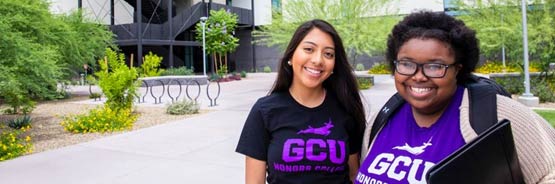
- Campus
Join Grand Canyon University's vibrant and growing campus community, with daytime classes designed for traditional students. Immerse yourself in a full undergraduate experience, complete with curriculum designed within the context of our Christian worldview.

- Online
Pursue a next-generation education with an online degree from Grand Canyon University. Earn your degree with convenience and flexibility with online courses that let you study anytime, anywhere.
* Please note that this list may contain programs and courses not presently offered, as availability may vary depending on class size, enrollment and other contributing factors. If you are interested in a program or course listed herein please first contact your University Counselor for the most current information regarding availability.
* Please refer to the Academic Catalog for more information. Programs or courses subject to change.
tostadothembleavelf.blogspot.com
Source: https://www.gcu.edu/degree-programs/bachelor-science-early-childhood-special-education
0 Response to "Special Education Pre School Continuing Education Online"
Post a Comment